
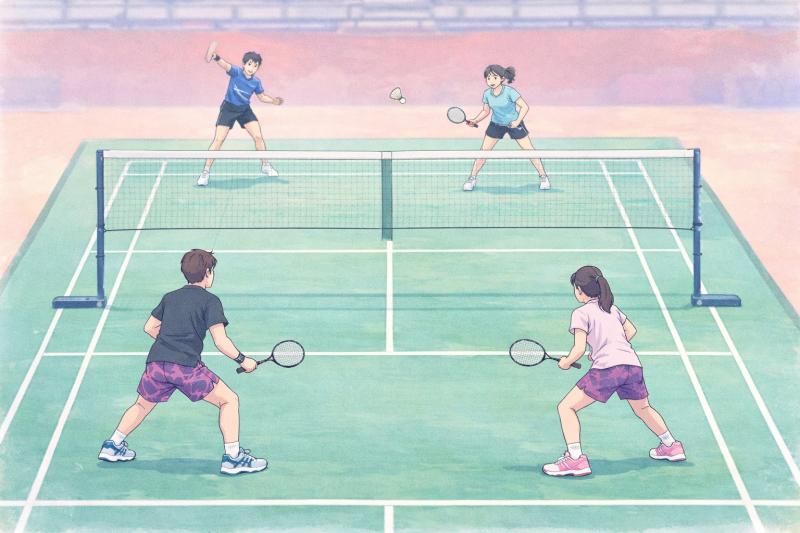
As parents, it is natural to look at results. Wins feel like progress. Losses feel worrying. But in junior sport development, not every tournament should be considered to only measure success by the scoreboard.
Some tournaments should be entered for a different purpose. These planned events are called preparational tournaments. Understanding this concept helps parents support their child better, reduce unnecessary pressure, and allow real development to happen.
What Is a Preparational Tournament?
A preparational tournament is a competition entered to develop or test specific skills under real match pressure, not to chase results. The child is not there to prove they are the best, this is very common in child development. They are there to practice parts of their game that cannot be fully trained in a session.
Usually the first 1-2 seasons are tasters, the coach also do not take the player to its mental limits, as they need to learn each others language, so communication will be dense and meaningful in a very short time.
These tournaments are used intentionally by coaches to:
- Test learning in real conditions
- Expose strengths and weaknesses
- Build long-term performance foundations
They are not “less important” tournaments. They are important for different reasons.
What “Court Time” Actually Means
Court time does not mean “we attended a tournament.” Court time means time spent solving real problems on court.
This includes:
- Reading the opponent’s movement and intentions
- Making decisions under time pressure
- Executing footwork when tired
- Holding technique when nervous
- Resetting emotionally after mistakes
Some of these skills cannot be learned in training alone. They only appear when there is an opponent, an umpire, a score, and pressure. That is why court time has value even when matches are lost.
Why the Score Is Not the Main Measure
In preparational tournaments, the score is information, not judgement. A loss does not automatically mean poor performance.
A win does not automatically mean good development.
What matters more is, did the player use the right footwork? Did they make better decisions as the match progressed? Have they attempted to correct shots even when they failed? Could they recover emotionally after errors?
Sometimes a player appears to perform worse on the scoreboard because they are:
- Playing at higher speed
- Using new movement patterns
- Applying more physical pressure
- Taking necessary tactical risks
This is not regression. This is learning under load.
Testing Speed and Intensity Under Pressure
Tournaments are one of the few environments where speed and intensity can be tested honestly. In training, speed is controlled. Pressure is managed. In competition, speed must be expressed while tired, nervous, and reacting instantly.
Some tournaments are entered specifically to test:
- How fast the player can move when it truly matters
- Whether technique survives at high intensity
- How stamina holds across multiple matches
- How decision-making changes when the pace becomes uncomfortable
When speed and intensity are the focus, results often drop. That is expected. These tournaments expose limits. Limits are useful. They show exactly what needs to be trained next. If that information is gained, the tournament has done its job.
Why Children Cannot Go “All-Out to Win” Every Time
Even the very best athletes in the world cannot perform at peak level every week. Top international players regularly fail to make podiums across consecutive tournaments.
Not because they are inconsistent. Because elite performance is physically, mentally, and emotionally demanding. If the best athletes on the planet cannot sustain peak output week after week, it is unrealistic and unhealthy to expect that from children.
For young players, treating every tournament as “must win” leads to excessive pressure, tight, fearful decision-making, increased injury risk or early mental fatigue and burnout
Long-term development requires planned variation:
- Learning phases
- Testing phases
- Performing phases
- Recovery phases
Preparational tournaments belong to the learning and testing phases. They protect future performance by not demanding peak output all the time.
What Parents Should Focus On Instead of Results
Your role is not tactics. Your role is the emotional environment. No coach can take it like you with your child. Support learning, not judgement. Look for effort, not outcome. Curiosity, not fear. Improvement, not comparison to others.
A calm, supportive parent environment helps children:
- Stay motivated
- Learn faster
- Handle pressure better
- Enjoy the sport longer
Advisory for Parents What to Say
Use these phrases. Keep them short. Repeat them often.
Before the match
- “Today is about court time and learning.”
- “What is your focus today, movement, decisions, or calm?”
- “I care about your effort, not the score.”
After a loss
- “I’m proud you stayed in it.”
- “What did you learn today?”
- “What will you take back to training?”
After a win
- “Good work. What actually worked today?”
- “What did you do better than last time?”
When emotions rise
- “Breathe. Reset. One rally at a time.”
- “It’s okay to feel upset and still compete.”
If comparison starts
- “We don’t compare you to teammates.”
- “We compare you to your past self.”
- “Your journey is your own.”
Avoid post-match analysis in the car. Let emotions settle first. It might take days.
What Success Looks Like in a Preparational Tournament
Success looks like:
- Better movement at the end of the day than the start
- Improved decisions by game two
- Faster emotional recovery
- Clear feedback for future training
If those things happen, the tournament has done its job. The scoreboard will matter later. Right now, building the player matters more.